
A dryer that needs two cycles is almost never a dryer that has lost its heat. It is usually a dryer that cannot get rid of the moisture it is producing, and the fault lives in the four inches of duct behind it rather than in the machine.
There is a fast way to tell which one you have.
The two-minute test
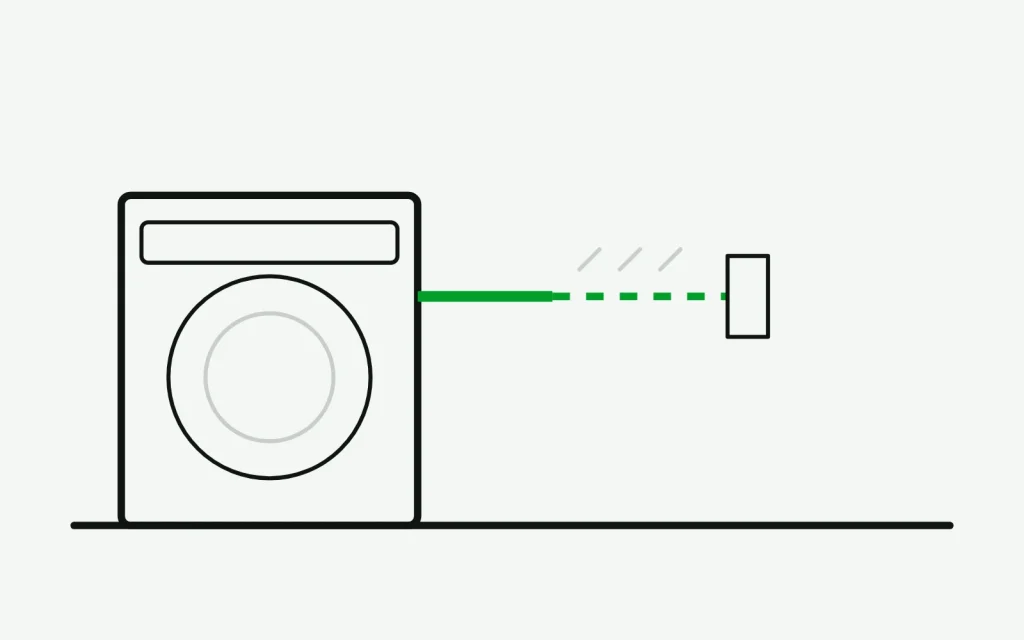
Run the dryer on a heated cycle and go outside to the vent hood. You should feel a strong, warm, steady push of air. Weak air, or air that is barely warm, means the duct is restricted. Strong air that is cold means the heat source has failed. Those are two completely different repairs, and this test separates them before anyone opens the machine.
While you are there, check that the hood’s flap actually opens. Lint packs behind those flaps, and a hood that only opens halfway throttles everything upstream of it.
Restricted airflow: where it hides
- The lint screen, which everyone cleans, and the housing under it, which nobody does. A vacuum crevice tool down that slot pulls out a surprising amount.
- Flexible foil or plastic duct crushed behind the machine. Every ridge catches lint, and pushing the dryer back against the wall folds the duct into a right angle.
- Long runs with several elbows. Each turn costs airflow, and a duct that snakes across a basement ceiling to reach the far wall was marginal on the day it was installed.
- Bird nests and screens at the exterior hood. A vent screened against animals collects lint until it stops passing air.
Rigid metal duct, the shortest practical run, and no screen at the hood is the arrangement that stops this happening again.
This is also the fire question
Failure to clean is the leading cause of home dryer fires, and the mechanism is exactly the one above: restricted airflow, lint against a heat source, a machine running longer and hotter every load to finish the same wash. A dryer that has started taking two cycles has been doing this for a while.
In a triple-decker or an apartment building where the run reaches the roof, that duct is also shared history with everyone who lived there before you. Those are worth cleaning professionally rather than optimistically.
When it really is the machine
Strong airflow and no heat points inside. On an electric dryer that is usually the heating element or a blown thermal fuse — and a thermal fuse blows because of a restricted vent, so replacing it without fixing the duct just buys a few weeks. On a gas dryer it is typically the igniter or the valve coils.
Two other patterns worth naming. A dryer that stops after a few minutes on auto-dry but runs fine on a timed cycle usually has dirty moisture sensor bars inside the drum, which wipe clean with rubbing alcohol. And a dryer that tumbles cold on every setting sometimes just has the wrinkle-guard or air-fluff option selected.
Habits that keep it fixed
- Lint screen every load, and the housing under it a few times a year.
- Full duct cleaning annually, more often with pets or a long run.
- Do not overload. A packed drum tumbles nothing and dries nothing.
- Leave a few inches behind the machine so the duct is not folded flat.
If the airflow test came out weak and the duct is beyond reach, or it came out strong and cold, that is where we come in — see dryer repair or call (617) 404-9944. Landlords running several units will find the turnover version of this list in our rental turnover checklist.
