
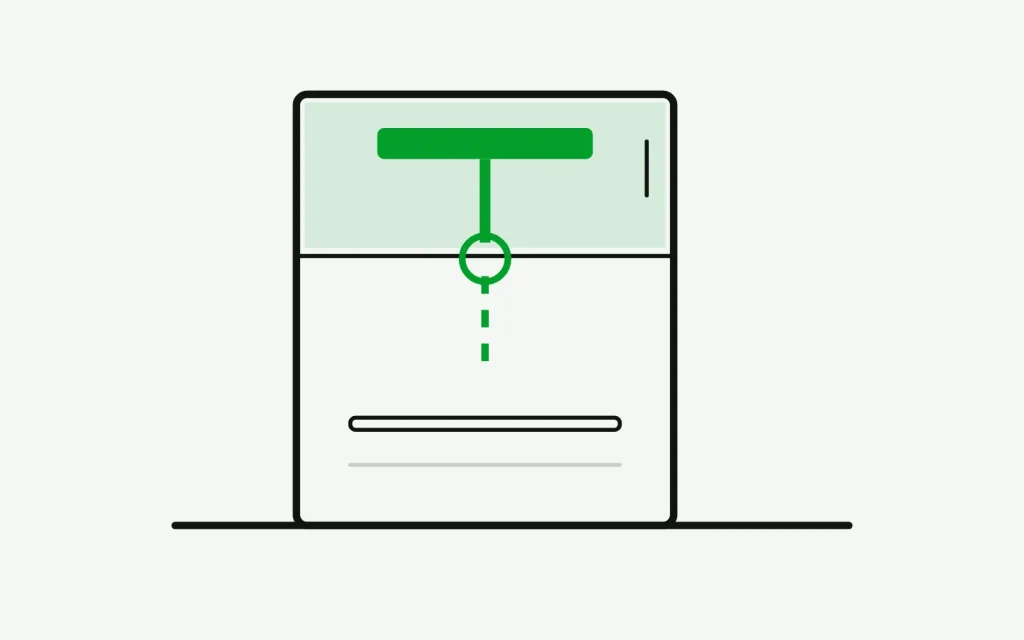
The freezer is rock solid and the fresh food compartment is warm. It sounds like the refrigerator is half broken, and it is one of the most diagnostically useful complaints a customer can hand us, because that single asymmetry rules out most of the machine.
In almost every modern refrigerator, cold is made in one place — the evaporator behind the freezer wall — and then blown into the fresh food compartment. A cold freezer proves the sealed system, compressor, and refrigerant charge are doing their job. The fault is downstream, in how that cold gets moved and metered.
Three parts account for most of these calls
- The evaporator fan. It pushes freezer air through a duct into the fridge section. When it fails, the freezer stays cold by conduction and the fridge slowly climbs. A telltale: the fridge is warmer after the door has been closed for hours, and the freezer sounds unusually quiet.
- The defrost system. Every frost-free refrigerator melts the evaporator clear on a cycle. When the heater, thermostat, or control fails, frost builds into a solid block over the coil, air stops passing, and the fridge warms while the freezer holds. A telltale: the back panel inside the freezer is cold to the touch and the fan sounds like it is hitting something.
- The damper. A flap that meters how much freezer air enters the fridge. Stuck closed, it starves the compartment; stuck open, the fridge freezes lettuce instead.
What to check before calling
Pull everything away from the vents inside the fridge and the freezer. A box of leftovers parked against the return vent produces exactly this symptom and costs nothing to fix. Then check that the freezer is not packed so tightly that air cannot circulate — frost-free designs need clearance to work.
Vacuum the condenser coils. On most units they are behind a snap-off grille at the bottom front or on the back. In a house with pets, a coil packed with hair is a genuine cause of poor cooling and a five-minute job.
Finally, confirm the door seals. Close the door on a dollar bill and pull; if it slides out with no resistance anywhere along the gasket, the seal is done and warm room air is being invited in all day.
The test that tells you which one it is
Open the freezer and listen. In most models the evaporator fan runs whenever the compressor does, and pressing the freezer door switch by hand should let you hear it. Silence with a running compressor points at the fan or its control. A whirring that sounds like a card in bicycle spokes points at ice contacting the fan blade, which points at defrost.
You can confirm the defrost theory without tools: unplug the unit for a few hours with the doors open, then plug it back in. If it cools normally for a day or two and then repeats the failure, the frost had melted and rebuilt. That is a defrost fault, and it will not resolve itself.
What this is almost never
It is almost never low refrigerant, because a refrigerator that had lost its charge would fail to freeze first. It is also rarely the thermostat setting, though it is always worth a glance. And a fridge that is warm while the freezer is warm too is a different problem entirely — that one does point at the sealed system or the compressor.
Food first
While you are sorting this out, treat the fresh food compartment as unrefrigerated once it has been above 40°F for more than a couple of hours. Move what matters to the freezer or a cooler. A repair visit is cheaper than the contents of a full refrigerator, and both are cheaper than a foodborne illness.
We stock the common fan motors, defrost heaters, and thermostats for the brands we see most in Boston kitchens, so a straightforward version of this repair is usually one visit. See refrigerator repair or call (617) 404-9944 — describing which compartment is warm on the phone often tells us what to bring.
