
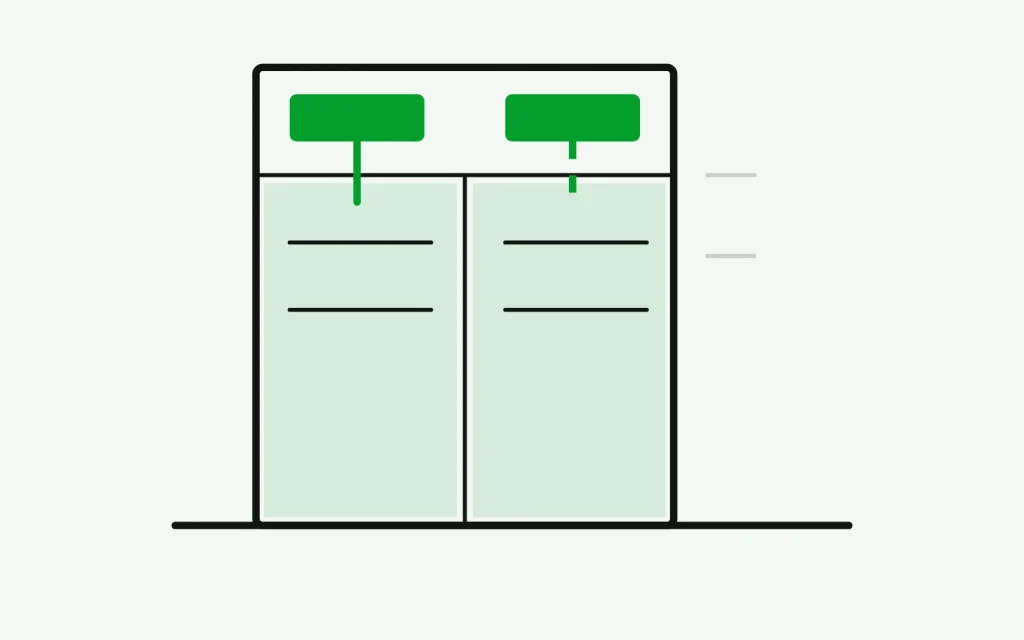
A built-in refrigerator is not a freestanding one with nicer panels. Sub-Zero, Viking, Thermador and their peers are engineered around a different premise: the cabinet is part of the kitchen, the machine is expected to be serviced rather than replaced, and in many models the fresh food and freezer sections have entirely separate sealed systems.
That last detail changes the diagnosis before anyone opens anything.
Two systems means the symptom means something different
On a standard refrigerator, a warm fridge with a cold freezer points at airflow — a fan, a defrost fault, a damper. On a dual-compressor built-in, the same symptom can mean the fresh food system alone has failed, which is a different and larger repair.
So the first question is which system is affected, and the second is whether the other one sounds like it is running. Telling a technician “the fridge side is at 50 and the freezer is fine, and I can hear only one compressor” gets you a correct parts list on the first visit.
The condenser is at the top, and it is why most of these calls happen
Most built-ins pull air through a grille above the doors rather than from underneath. That grille collects dust, and in a working kitchen it collects grease with it. A blanketed condenser cannot reject heat, and the machine runs longer, warms up, and eventually fails a component that was fine until it started running twenty hours a day.
Manufacturers generally ask for that condenser to be cleaned every six to twelve months. It is the single highest-value thing an owner can do, it takes fifteen minutes with a vacuum and a soft brush, and skipping it is what turns a $9,000 appliance into a service contract.
Gaskets, doors and the cabinet around them
Built-in doors are heavy, magnetically sealed, and carrying a cabinet panel that adds weight the hinge has to hold in alignment. A gasket that has gone hard, or a door that has dropped a few millimetres, lets in a continuous trickle of room air — which shows up as frost inside, a compressor that never rests, and condensation on the trim.
Do the paper test around the whole perimeter. On these machines, hinge adjustment and gasket replacement are ordinary service items rather than signs of an aging appliance.
Why repair is nearly always the answer
The rule of thumb about repair cost against replacement cost breaks down here. Replacing a built-in is not buying an appliance; it is a cabinetry project, because the opening was built for a specific model and the panels were made to match the kitchen. A replacement that fits without carpentry may not exist any more.
These machines are also designed to be rebuilt, and parts stay available far longer than for entry-level models. Repairs that would be absurd on a $700 refrigerator are routine on a built-in. The general version of that arithmetic is in our guide to repairing versus replacing appliances; premium built-ins sit firmly on the repair side of it.
What to do before the visit
- Put a thermometer in each compartment and note actual temperatures rather than the display.
- Pull the upper grille and look at the condenser. If it is furred over, say so when you call.
- Note which compartment is affected and whether both compressors run.
- Find the model and serial number — inside the fresh food compartment on most models. Parts for these differ by production run.
- Move irreplaceable food elsewhere. Do not wait for the visit to decide that.
We service built-in and professional refrigeration across Greater Boston and stock the common parts for the brands we see most in Boston kitchens: refrigerator repair, and the brand pages for Viking, Thermador and Sub-Zero. Call (617) 404-9944 with the model number and the two temperatures.
